Stockton University’s Master of Science in Accounting prepares graduate students to deepen their accounting expertise, gain professional experience, and pursue advanced opportunities in the field. Designed with CPA preparation in mind, the program builds knowledge in auditing, taxation, financial reporting, management accounting, accounting information systems, and business analytics.
Students connect advanced coursework with internships and other professional experiences while exploring areas such as Forensic Accounting and Business Analytics. With evening classes based at Stockton’s Atlantic City campus and some online coursework, the program offers flexibility for students preparing to enter the profession or advance within it.

- Virtual Information Session
- Costs
- The School of Business
- Financial Aid
- Scholarships
- Graduate and Continuing Studies

Prepare for CPA and Career Success
How does Stockton University’s M.S. in Accounting prepare students for the accounting profession?
Stockton’s M.S. in Accounting combines advanced coursework with professional experience. Students build skills in auditing, taxation, financial reporting, cost accounting, accounting information systems and business analytics. Internships give students opportunities to apply what they learn while preparing for careers in public accounting, business, government and nonprofit organizations.
How does the program support students pursuing CPA licensure?
The curriculum includes topics covered on the CPA exam and helps students work toward New Jersey’s education requirements for CPA licensure. Courses in auditing, taxation, financial reporting and accounting systems strengthen key areas of professional practice, while internships can provide valuable experience in the field.
What areas can students specialize in?
Students can expand their expertise through Forensic Accounting and Business Analytics. Forensic Accounting covers topics such as corporate fraud, fraud analytics and financial investigations. Business Analytics helps students use data to support financial analysis and business decisions, an increasingly important skill in the accounting profession. Students can also choose up to three MBA courses to design their own specialization based on their interest and career goals.
What professional experience is built into the program?
All students complete an accounting internship, with options for extended internships or co-op experiences. Students may gain experience in taxation, auditing, financial accounting or managerial accounting while working with CPA firms and other organizations. These experiences help students build professional skills, industry knowledge and career connections.
What careers can a Master of Science in Accounting support?
The degree prepares students for opportunities in public accounting, private industry, government and nonprofit organizations. Advanced study in auditing, taxation, financial reporting, forensic accounting and business analytics can support CPA preparation and help students build the technical knowledge needed for career growth in accounting.
Program Faculty Chair
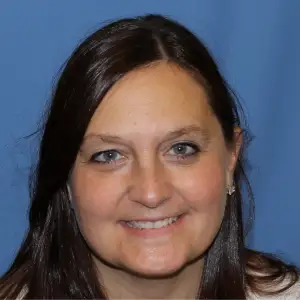
Carla Cabarle, DBA, MS, CPA
Direct Entry / Dual Degree
Direct Entry
Within a year of their undergraduate graduation, graduates of any undergraduate program in the Stockton University School of Business may obtain Direct Entry into the MSAC program provided they meet all of the MSAC foundation and prerequisite requirements through their undergraduate coursework.
BS/MSAC Dual Degree
Complete your undergraduate degree and an MS in Accounting (BS/MSAC) in approximately 5 years.
The Accelerated Dual Degree Program will prepare students for professional careers in accounting. One of the principal goals of the program is to provide a cost-effective and relevant path to complete the 150-credit education requirement for CPA licensure. The MSAC integrates experiential learning opportunities inside and outside the classroom with a deep dive into the concepts critical to success as a CPA.
Why choose the Accelerated Dual-Degree Program? An accelerated Dual-Degree Program offers students:
- To complete both the undergraduate and MSAC degrees in approximately 5 years.
- To advance your knowledge in content critical to success as a CPA
- To leverage your success as an academically motivated Stockton Business major (cumulative GPA of 3.2 or higher).
- To begin taking MSAC classes in your senior year.
Admissions Criteria
Application Deadline
While graduate admissions selection committees review applications until the start of the semester, by applying prior to the Priority Consideration Date, you can ensure that your transition to Stockton is as smooth as possible.
Priority Consideration Dates:
Summer: March 15
Fall: July 1
Spring: December 1
Prerequisite Requirements
- Minimum undergraduate GPA of 3.2
- Prerequisite Courses
Undergraduate Prerequisite Courses :
- Bachelors Degree in Business - which includes the following (or equivalent to):
- Statistics
- Macroeconomics
- Microeconomics
- Technology in Business
- Intro to Business Analytics
- Intro to Management
- Marketing Principles
- Business Law
- Intro to Financial Management
- Operations Management
- Managerial Accounting
- Financial Accounting
- Intermediate Accounting I
- Intermediate Accounting II
- Cost Accounting
- Taxation of Individuals & Entities
- Auditing
- Advanced Accounting
Above requirements may be met by successful completion of approved corresponding undergraduate courses at a 2 or 4 year institution.
To be considered for admission to the MSAC program, applicants must submit the following by the deadline:
- Click here to start your application.
- If you are a recent Stockton graduate, check to see if you qualify for the Direct Entry Option.
- Application fee: $50 (non-refundable), submitted with your online application
- Graduate application essay
- Two current letters of recommendation sent electronically via the online application.
- Resume
- Official transcripts from all colleges and universities attended must be sent directly
to the Office of Graduate Admissions electronically, by mail, or in-person. The Office
of Graduate Admissions will retrieve Stockton transcripts on your behalf.
By mail:
Office of Graduate Admissions, N-Wing 007a
101 Vera King Farris Drive
Galloway, NJ 08205-9441
Electronically:
gradschool@stockton.edu -
To review international applicant deadlines and admission criteria, please click here.
Frequently Asked Questions
Does the program offer CPA exam preparation?
Yes, the curriculum is aligned with the CPA Evolution model to ensure students are well-prepared for the CPA exam. Completion of the program (in addition to an earned Baccalaureate) will satisfy the education requirements for licensure in New Jersey.
What are the program's concentrations?
Students can choose to specialize in Forensic Accounting or Business Analytics to further enhance their expertise in these growing fields. In some circumstances, previously completed graduate business courses may be bundled to satisfy one of the elective concentrations.
Are internships required?
Yes, internships are a key component of the program. Students can earn between 3 to 21 credits through internships, depending on their chosen pathway, all of which count toward the 150-credit education requirement for CPA licensure in NJ.
How long does it take to complete the MSAC program?
The MSAC can be completed in one to two academic years while attending full-time. Part-time options are available. For students in the BS/MSAC Dual Degree pathway, both degrees can be completed in a total of five years.
Can I become a CPA without an undergraduate degree in accounting?
Yes. Students with an undergraduate degree in business or non-business disciplines are able to pursue a CPA license by fulfilling requirements set forth by the state in which the person seeks licensure. This program is designed to provide a pathway for students who want to earn a Master's degree in Accounting and to become a CPA.
Extended Internships
The Extended Internships are intensive practicums offered through Stockton University's Master of Science in Accounting (MSAC) program in cooperation with CPA firms or industry partners. These experiences provide students with the opportunity to gain substantial intensive hands-on experience while earning academic credit, which count towards the 150-credit education requirement and the one-year work experience requirement for CPA licensure in New Jersey.
Students can pursue an extended internship (9 or 18 credits) instead of completing
course electives.This allows students to gain intensive and substantive real-world
professional experience under the supervision of an active CPA. Both the 9-credit
and the 18-credit options can be in taxation, auditing, advisory, financial accounting
and managerial accounting. The 18-credit option is for work at CPA firms only while
the 9-credits option is for work in private industry, government, non-profits and
CPA firms.
Key Features of the MSAC Extended Internships:
- Unparalleled Access to the Accounting Industry
This practicum offers unparalleled access to the accounting industry, bridging the gap between classroom learning and real-world application. By working directly with professionals at CPA firms, private industry, government agencies or non-profits, students will gain invaluable insights and experience that will accelerate their career growth. - Pathway to Employment
These experiences connect students with industry leaders, building a professional network and career opportunities. - CPA Readiness
With guidance from experienced CPAs and real-world tasks, students will be better prepared to take and pass the CPA exam. The skills developed through a practicum will give them an edge in both exam performance and career advancement.
For those pursuing CPA licensure or advanced roles in accounting, an extended internship is the perfect complement to Stockton University's MSAC program, providing the hands-on training and professional connections needed to thrive in today’s competitive financial landscape.
Accounting Skills for Career Success
The Master of Science in Accounting program is designed to help students build advanced accounting knowledge, strengthen technology skills, and develop the professional abilities needed for today’s accounting field.
Technical Accounting Skills
Students build advanced knowledge in auditing, taxation, financial reporting, cost accounting, and accounting information systems. They learn to identify business issues, assess risks, apply accounting standards, and develop practical solutions.
Technology and Data Skills
Students use current digital tools and data analytics to support accounting decisions. They learn how technology can help identify problems, improve business processes, and strengthen work in areas such as auditing, taxation, financial reporting, cost accounting, and accounting information systems.
Professional Skills and Specialization
Students strengthen communication skills and develop deeper expertise in areas such as auditing, taxation, financial reporting, cost accounting, accounting data analytics, and accounting information systems. Internships, co-ops, and elective coursework in business analytics and forensic accounting help students apply these skills in professional settings.
Accreditation
Stockton University’s School of Business is accredited by the Association to Advance Collegiate Schools of Business (AACSB).
The Bureau of Labor Statistics (BLS) projects employment of accountants and auditors nationwide to grow 5% from 2025 to 2035, faster than the average for all occupations.
BLS 2025 data show median weekly earnings of $1,876 for workers with a master’s degree, approximately 18.9% higher than the $1,578 for those with a bachelor’s degree. These national figures cover all fields of study, not specifically MBA or MS Accounting graduates, and apply to full-time wage and salary workers age 25 and older. Unemployment rates were 2.6% and 2.8%, respectively. The 2025 estimates exclude October, when data were not collected.
Apply today. If you have further questions you can Request More Information or call the Office of Graduate Admissions at (609) 626-3640 or email gradschool@stockton.edu.
{{ studyArea.title }}
{{ studyArea.type }}