Digging Deeper | How Stockton students turn curiosity into discovery through hands-on research
A hallmark of a Stockton education is hands-on, experiential learning. Students form deeper connections to course material when they put it into action, and Stockton’s curriculum offers undergraduate students a number of research opportunities typically reserved for graduate students at larger institutions.
“Research is an incredibly unique experience,” said Marisa Riley ’26, a recent graduate in Biochemistry & Molecular Biology. Riley worked with Nathaniel Hartman, associate professor of Biology, to study how developing brain stem cells respond to changes in a major growth-regulating pathway.
Beyond lecture- and lab-based courses, research allows students to dive deeper into their majors while building skills employers value, including time management, writing, critical thinking and reasoning.
“I developed a real knack for public speaking,” said Justin Andell ’26, who completed a three-year-long independent study with Matthew Bonnan, professor of Biology, which examined whether the shape of elbow bones can help scientists understand how extinct animals, including dinosaurs, stood, moved and lived.
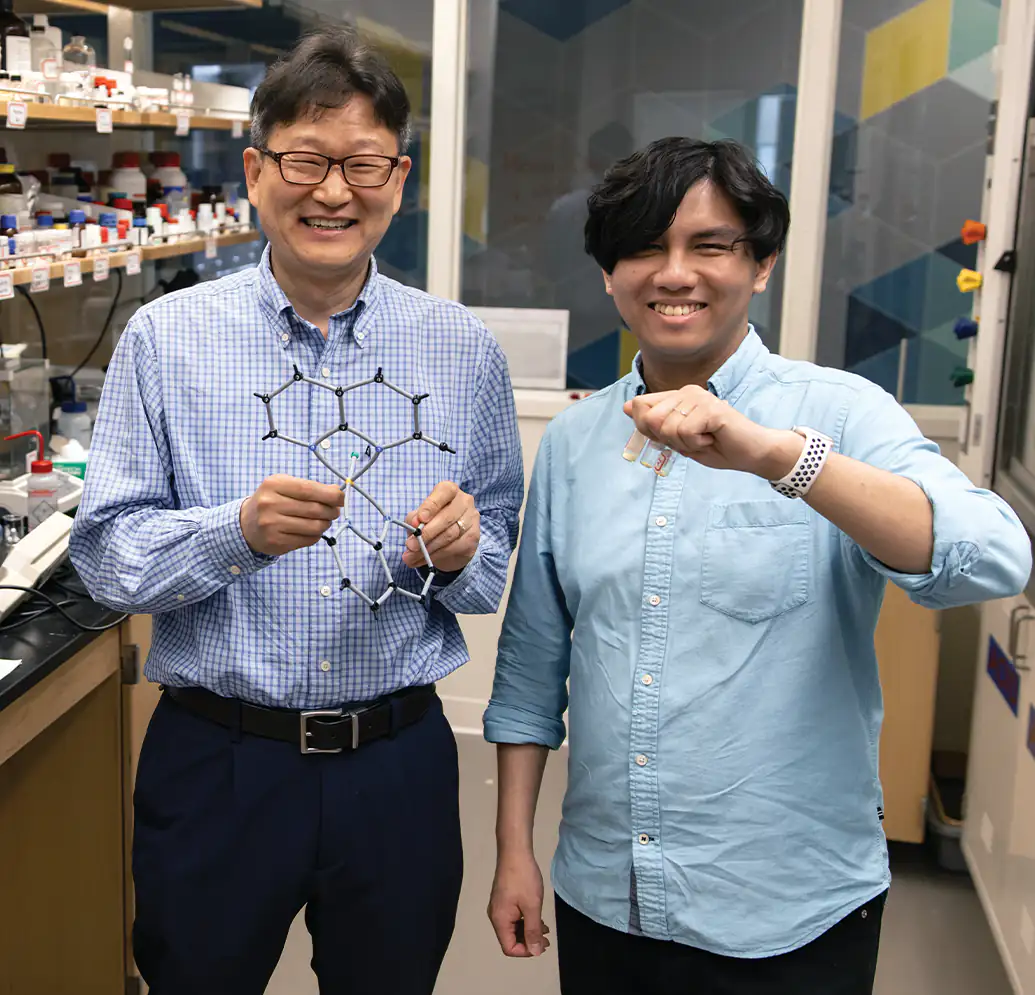
Daniel Ki, professor of Chemistry, with Andrew Wu ’23, whose undergraduate research experience helped launch his pursuit of a Ph.D. in chemistry.
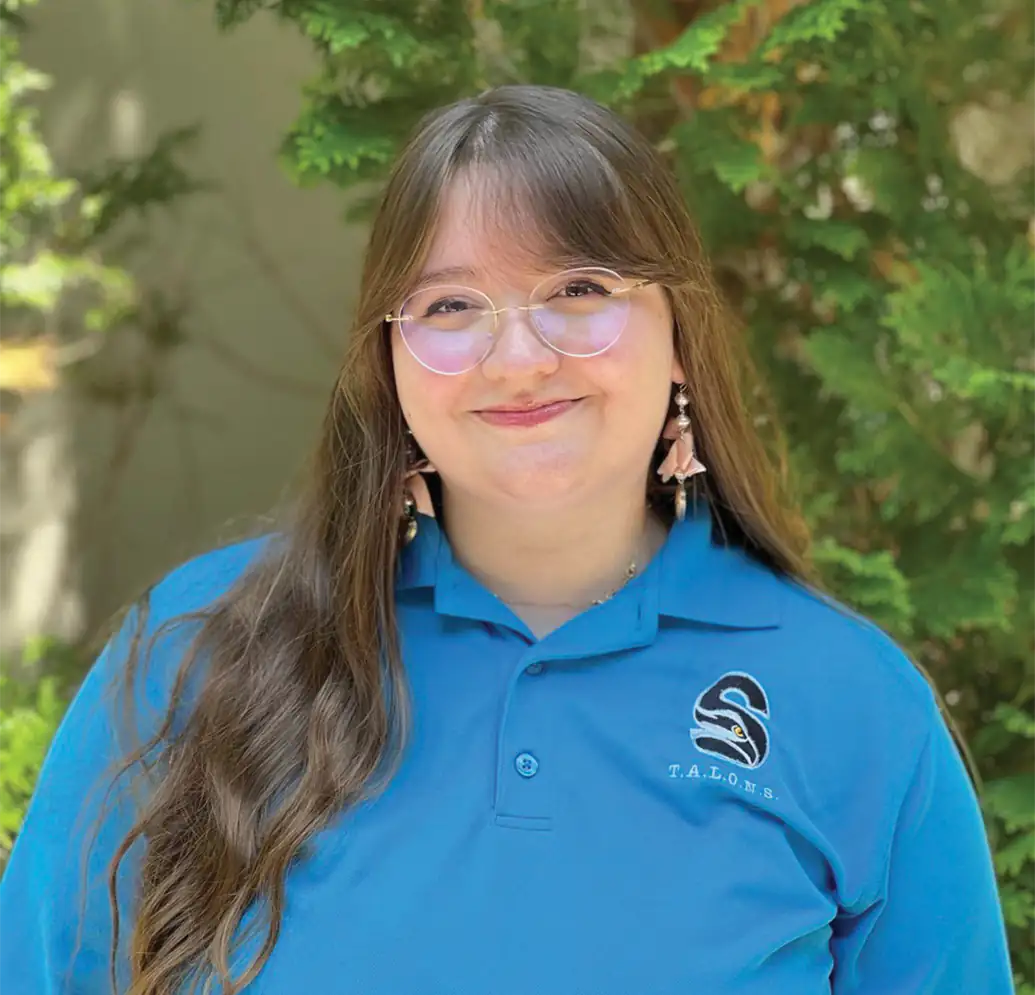
Marisa Riley ’26 is researching how cells build and use tiny structures that are essential to human health as a Postgraduate Research Associate at Yale University.
“We presented this research three times at the Natural Sciences and Mathematics Symposium at Stockton, three times at the Northeast Regional Vertebrate Evolution Symposium (NERVES), and once at the Society for Vertebrate Paleontology’s annual meeting,” he added.
Andell transferred to Stockton from Raritan Valley Community College at the recommendation of faculty members Emma Witt, associate professor of Environmental Science, and Mike Hozik, professor emeritus of Geology, who had listened to him present research on oysters during his time there.
“They specifically recommended I reach out to Dr. Bonnan as he is constantly onboarding students for undergraduate research opportunities,” he said.
Daniel Ki, professor of Chemistry, said students in his research group participate in every stage of the scientific process, from designing experiments and synthesizing compounds to analyzing data and interpreting results.
One story that remains especially meaningful to him is that of Andrew Wu ’23, a Biochemistry and Molecular Biology graduate now pursuing a Ph.D. in Chemistry at the University of Delaware.
“I first met Andrew in my Nanotechnology in Our Society course, when he was a computer science major still searching for direction,” Ki said. “His curiosity about chemistry and nanotechnology grew quickly, eventually leading him to change majors and join my research group.
“Through lab work, conferences and independent research, Andrew developed into a confident young scientist. He contributed to several research projects and three peer-reviewed publications, including one as first author. Watching him grow from an uncertain undergraduate into a Ph.D. student preparing for a career in science has been one of the most rewarding experiences of my career.”
But research at Stockton extends beyond the hard sciences. Projects occur across many disciplines and schools, deepening students’ understanding of various subjects and sparking curiosity.
Grace Schottler ’25 completed an independent study with Aleksondra Hultquist, associate professor of Critical Thinking and First-Year Studies, assisting with editing, writing headnotes and footnotes for “Volume 6, Love-Letters between a Nobleman and His Sister,” from the Complete Works of Aphra Behn. That work led to a Research Experience for Undergraduates (REU) Grant, which brought her to the Beinecke Rare Book & Manuscript Library at Yale University.
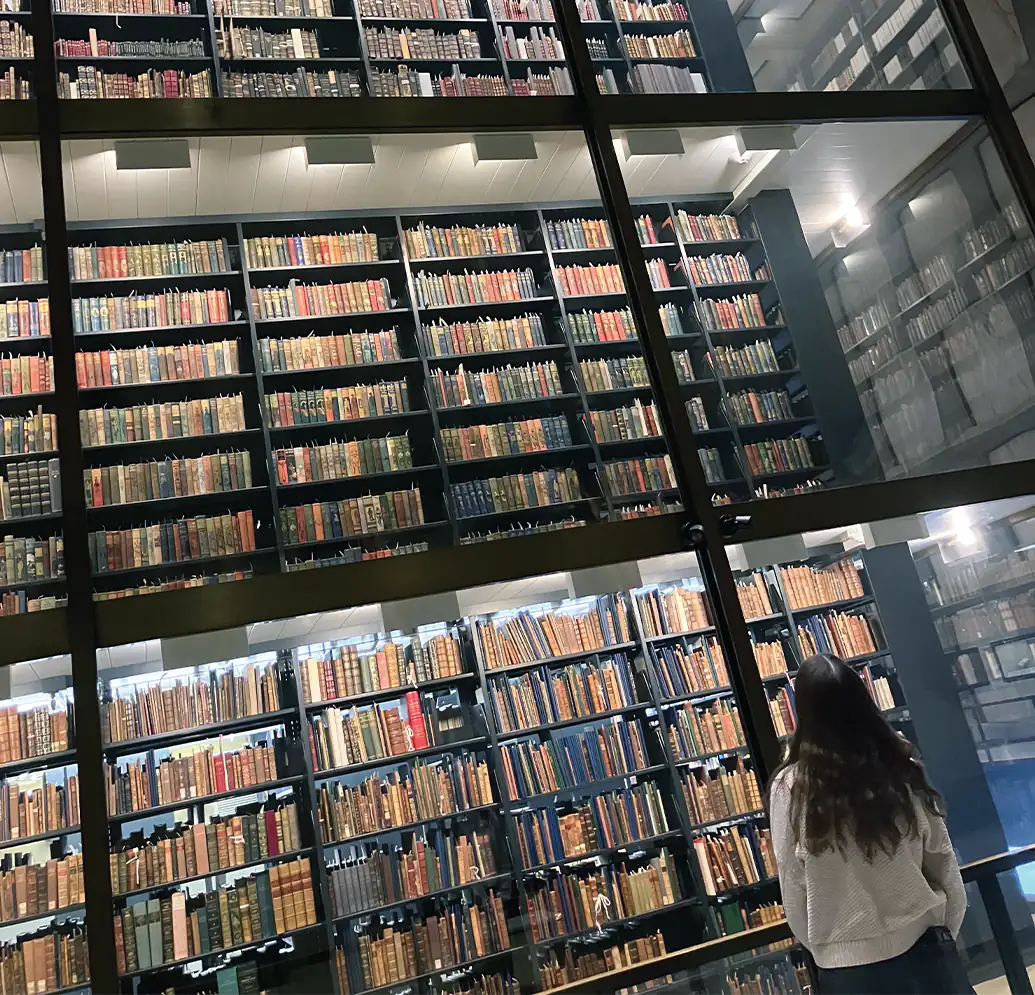
Grace Schottler ’25 at the Beinecke Rare Book & Manuscript Library at Yale University.
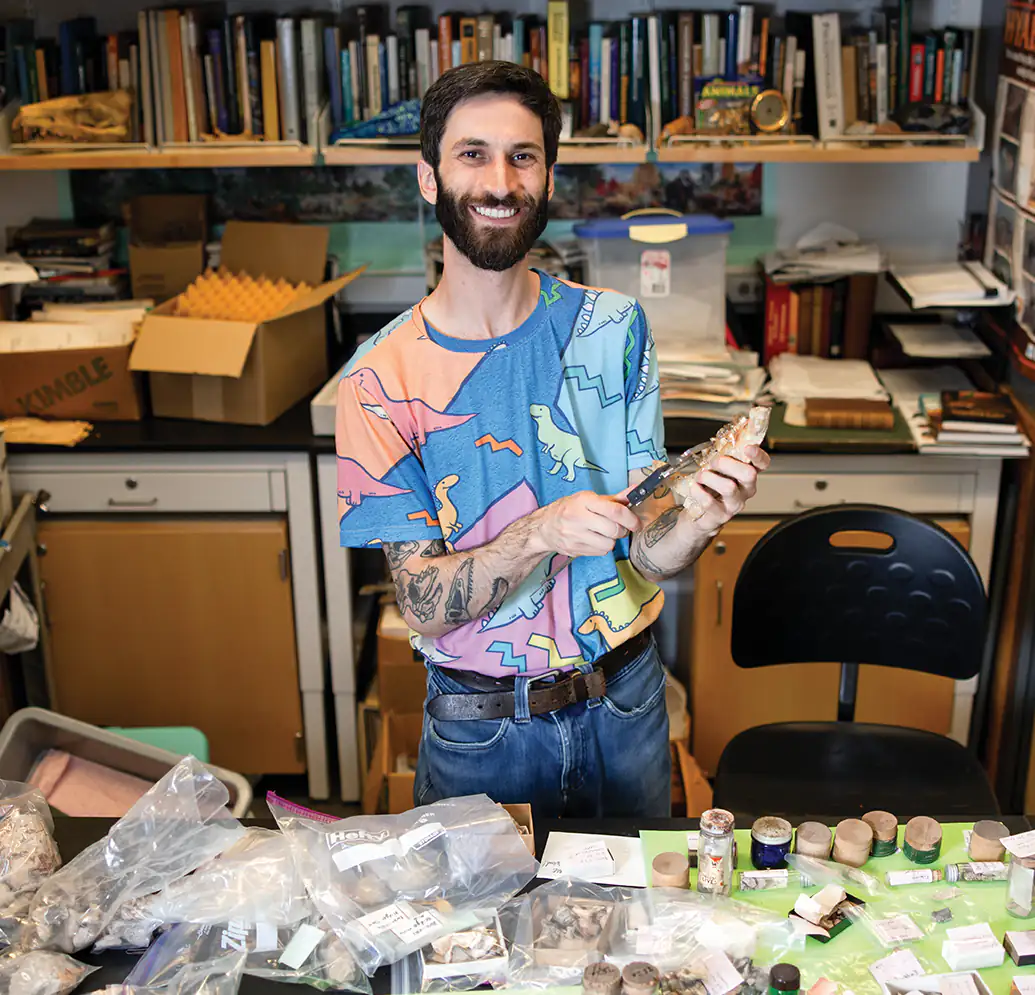
Justin Andell ’26 presented research examining how elbow bone shape can help scientists reconstruct the lives of extinct animals.
“I was able to hold first-edition copies of the text I had spent months looking over. This archival experience allowed me to apply what I had been devoting so much time in the classroom learning to a real-world experience,” the Literature major said. “This opportunity opened my eyes to the variety of occupations I can apply my degree to.”
“When we do an independent study, there is time to really delve into what the student finds fascinating — we can go down a research rabbit hole on punctuation, which Grace and I did,” Hultquist added.
And some students dig into research, literally.
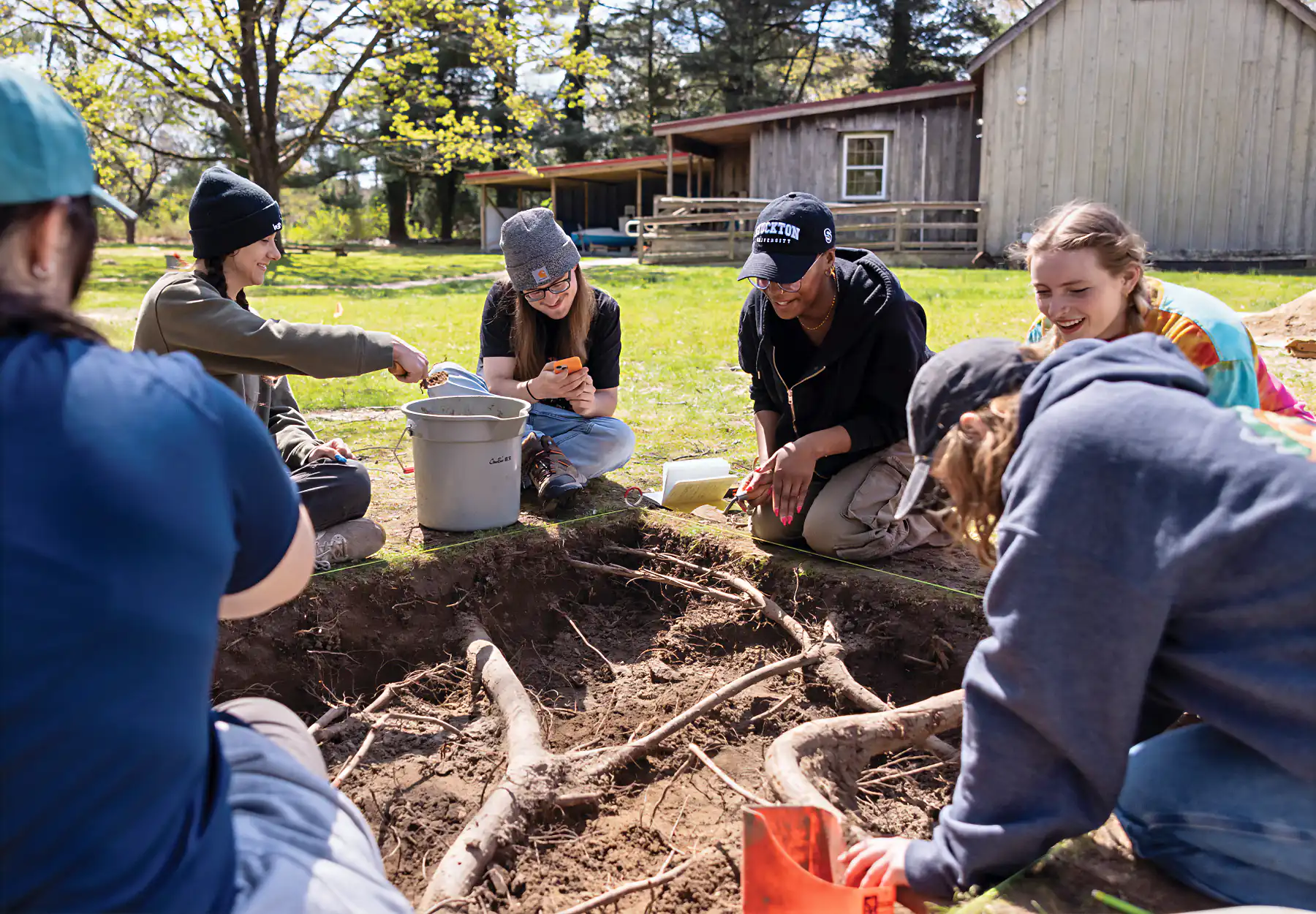
In Bobbi Hornbeck’s Archaeological Field Methods course, students collaborate with the Museum of Cape May County’s Digging History Project, answering questions about the property’s past.
They catalog museum artifacts by measuring, weighing and documenting objects for future research. Then they move into the field.
“Reading about what other people are doing is the hardest way to learn how to do archaeology. If you can’t feel the changes in the soil with your hand, it’s like you’ve reached a dead end just talking about it in class,” Hornbeck, assistant professor of Archaeology, said.
In the School of Social and Behavioral Sciences, Criminal Justice students partnered with the Hamilton Township Police Department to study the interactions between community members and local law enforcement. Hamilton Sgt. Craig Clayton ’04 worked with students and Jess Bonnan-White, professor of Criminal Justice, to develop the quantitative study.
Students stepped beyond the classroom and into the community, meeting residents at town and city hall gatherings to collect more than 450 survey responses about interactions with local law enforcement. Their work laid the foundation for graduate students to analyze the data and develop policy recommendations for the Hamilton Township Police Department.
Long before they graduate, Stockton students are contributing to meaningful scholarship, working alongside faculty mentors and tackling real-world questions to prepare them for what’s next and imagine what’s possible.
Previous:
The Walk Between Generations
Stockton is the official magazine of Stockton University and is published by the Division of University Advancement.
The magazine is produced through the collaborative efforts of our editors, designers, writers, photographers, and advancement leadership.
Stay connected with Stockton. Update your contact information to make sure you receive future issues of Stockton magazine and other university news.